

3D Printing in Architectural Model Making: Materials, Accuracy, and Limitations
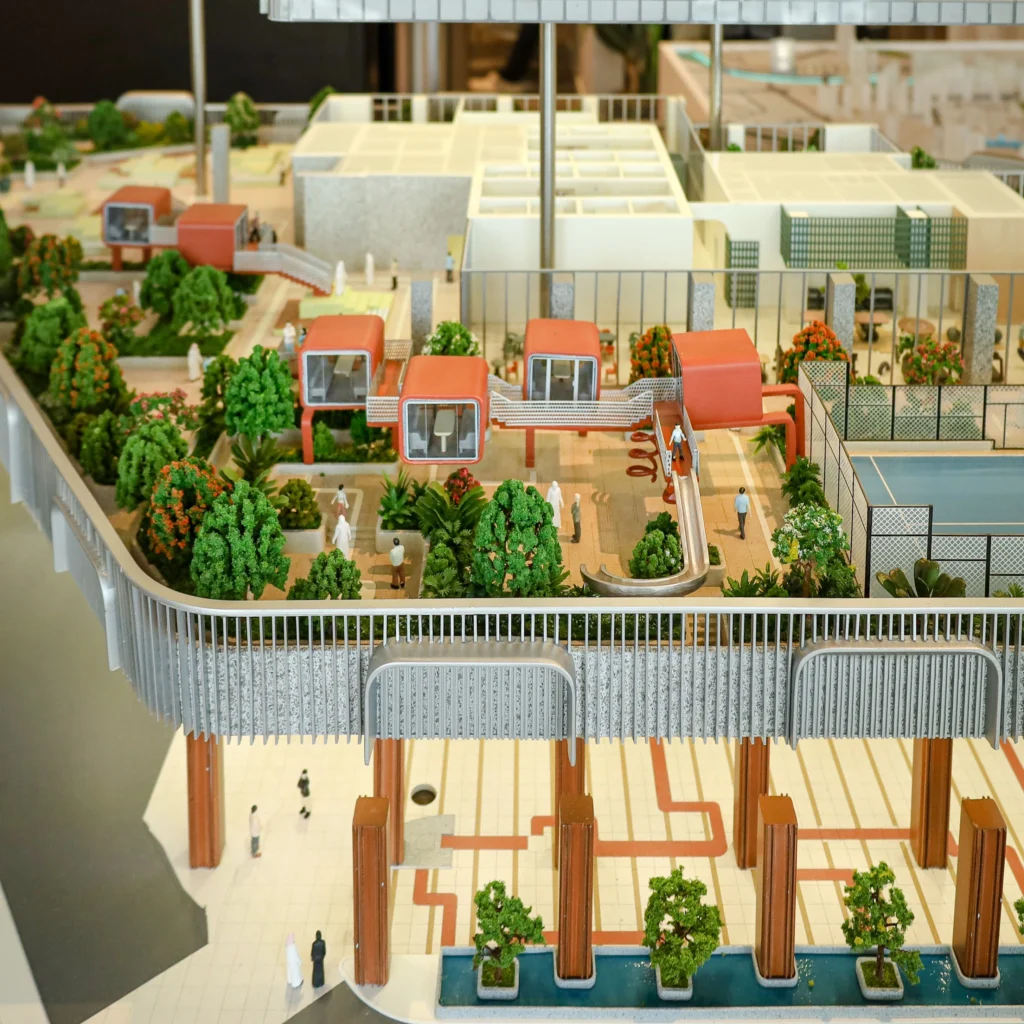
Introduction Model making has come a long way since it was purely a hand-and-blade craft. Hand cutting, CNC machining, laser cutting, and mould making are still very much part of the trade, but 3D Printing in Model Making has earned its place alongside them, especially for detailed components, complex forms, prototypes, and full scale models. The appeal for architects, developers, designers, and model makers is fairly obvious: you take a digital file and turn it into a physical object with dimensions you can repeat and geometry that would be painfully slow to cut or build by hand. That said, 3D printing isn’t a default “best option” for every model that comes through the door. Material choice, print resolution, layer height, the scale you’re working at, how much post-processing is needed, surface finish, and even how clean the original CAD file is — all of it shapes what comes off the printer. So before picking 3D printing over a more traditional route, it’s worth understanding what it actually does well, and where it falls short. This guide walks through how 3D printing gets used in architectural model making, which materials tend to come up, how accuracy really works in practice, where the technology shines, and where the old-fashioned techniques still win. What Is 3D Printing in Model Making? Put simply, 3D Printing in Model Making means building physical model components straight from a digital design, using an additive process — building the object up layer by layer, rather than carving it out of a block or piecing it together by hand. On an architectural project, that digital file might include things like: Once the file is prepped, the printer follows a set of instructions to build the part. Which printer and material make sense depends on the finish you need, the scale, the geometry, and of course the budget. That’s why 3D printing tends to earn its keep on models with repeated, intricate, curved, or heavily detailed parts. Why Bother With 3D Printing for Architectural Models? The biggest selling point is how well it handles complex geometry straight from a digital file. A design with curved façades, organic forms, or intricate repeating patterns can be a real headache to build manually. With a well-prepared file, a lot of that difficulty just goes away. 1. Complex geometry Forms that would take hours of careful hand-cutting and assembly can often be printed in one go. Think: 2. Repeatable components If a model needs a hundred nearly identical façade panels, columns, or windows, digital manufacturing keeps them consistent in a way hand-building rarely does. 3. Faster design iteration Architectural designs change — often. A revised digital model can go straight back to the printer without rebuilding every piece by hand, which is a big deal during design development or when presentation models need updating fast. 4. Detailed miniature components Some elements are simply too small or fiddly to make efficiently by hand. Depending on the printer, material, and scale, 3D printing can hold onto detail that would otherwise get lost. 5. Digital-to-physical workflow It creates a direct line from CAD or BIM straight to a physical object — no manual translation step in between, which speeds up moving from digital design to prototypes and presentation pieces. Materials Used in 3D Printing for Architectural Models Material choice should follow the model’s purpose, not just whatever filament happens to be sitting on the shelf. Different materials trade off strength, surface quality, resolution, flexibility, and how much post-processing they demand. PLA PLA is the everyday workhorse of 3D printing. It’s a solid choice for: It prints predictably and is easy to work with, though the surface usually needs some finishing if you’re going for a polished presentation look. ABS and similar engineering thermoplastics When a component needs to hold up to more handling or heat, engineering-grade plastics come into play — useful for functional prototypes. But warping, finishing demands, and whether your printer can actually handle the material are all things to check before committing to it for a presentation model. Resin Resin printing generally delivers finer detail and a smoother surface than most filament printing. That makes it a good fit for: The catch is extra post-processing — washing and curing, depending on the process — so it’s not always the fastest route. Other professional materials Specialist 3D printing service providers may have access to other materials depending on their equipment and what the project calls for. The main thing is to match the material to what the model is actually for. A rough massing study doesn’t need the same resolution or material as a client-facing presentation piece. How Accurate Is 3D Printing for Architectural Models? Accuracy is probably the most misunderstood part of this whole process. A printer’s spec sheet might quote a certain layer height or positional resolution, but that number on its own doesn’t tell you how accurate the finished part will be. What you actually get depends on: In other words, printer resolution and real-world dimensional accuracy are two different things. Scale matters more than you’d think The scale of the model changes what’s actually possible to print. A detail that reads clearly at 1:50 might simply disappear at 1:500 — it becomes too fine to reproduce. That’s why a good model maker checks the minimum printable feature size before sending a full model off to print. If a façade has very thin elements, they may need to be thickened or redesigned specifically for that scale. 3D Printing Accuracy vs. Architectural Model Requirements Model Requirement 3D Printing Suitability Large conceptual massing Excellent Complex curved geometry Excellent Repeated components Excellent Small decorative details Very good with suitable technology Extremely thin features Limited by scale and material Large flat surfaces Depends on technology and finishing Highly polished presentation surfaces May require post-processing Rapid design iterations Excellent One-off custom components Excellent Large architectural models Often combined with other fabrication methods The takeaway here is simple: the best models rarely come from one single production