

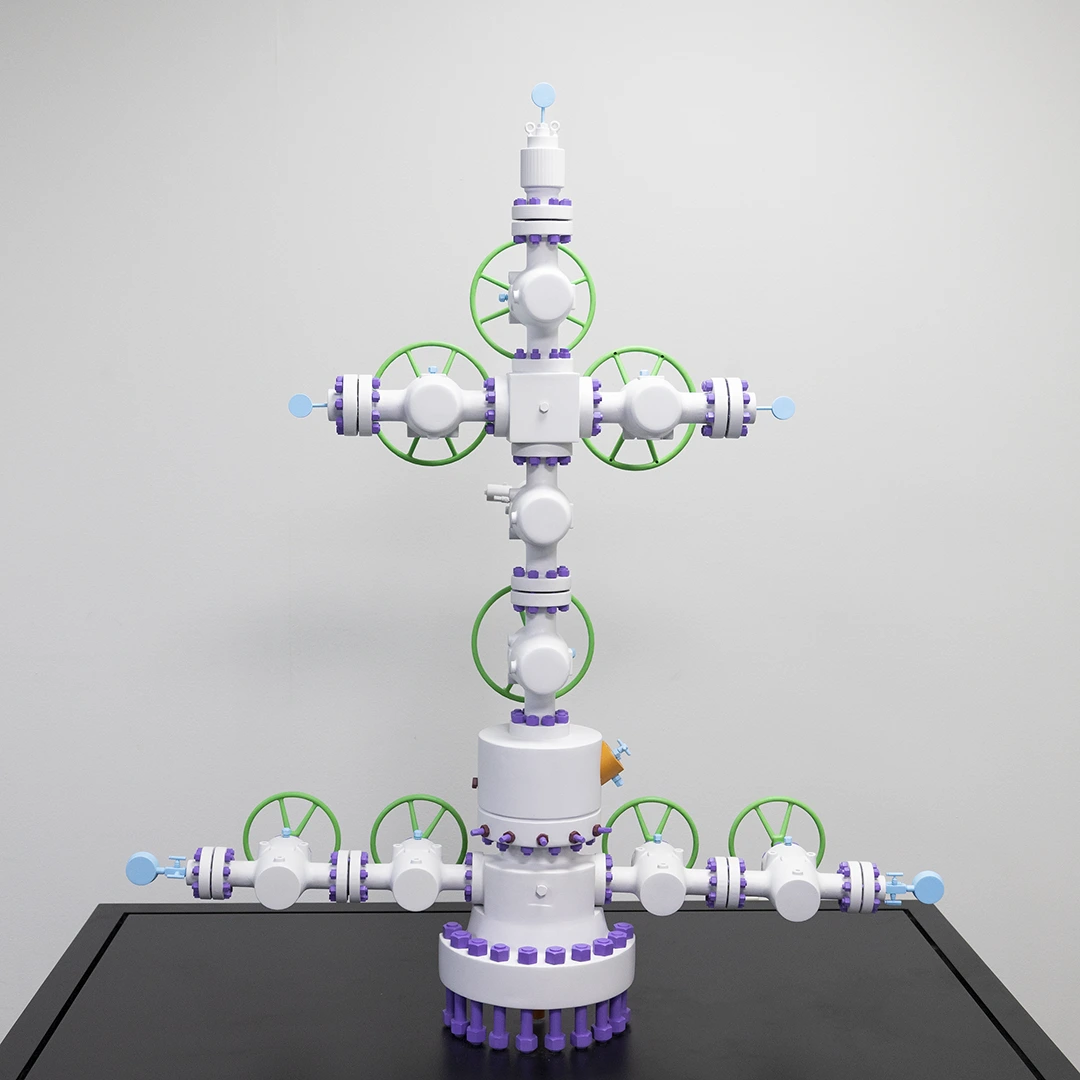
Developing a successful product requires speed, precision, and continuous improvement. Whether you’re designing a consumer product, an industrial component, or a medical device, every design iteration influences the final outcome. Traditional prototyping methods often involve long production cycles, expensive tooling, and multiple revisions that delay product launches. This is where 3D Printing for Product Development has transformed the innovation process. Modern additive manufacturing allows engineers, designers, and manufacturers to create accurate prototypes within hours instead of weeks, enabling rapid testing, validation, and refinement before full-scale production.
Businesses worldwide are adopting 3D printing services because they shorten development cycles, reduce costs, and provide greater design flexibility. Companies investing in 3D printing in Dubai and across the UAE are leveraging these capabilities to improve efficiency, accelerate innovation, and stay competitive in fast-moving industries.
This guide explains how 3D Printing for Product Development works, why rapid prototyping matters, and how professional 3D printing prototyping services help transform concepts into production-ready products faster than ever before.
Key Takeaways
- Understand how 3D printing accelerates product development.
- Learn why rapid prototyping reduces design risks.
- Discover the advantages of iterative product testing.
- Explore industries benefiting from additive manufacturing.
- See how professional 3D printing services improve development efficiency.
- Understand why businesses increasingly rely on custom 3D printing solutions before mass production.
Why Speed Matters in Modern Product Development
Today’s markets evolve quickly. Customer expectations change rapidly, competitors launch new products frequently, and businesses must respond faster than ever.
Every additional week spent refining a prototype can delay product launches, increase development expenses, and reduce market opportunities.
Modern product development focuses on:
- Faster innovation cycles
- Reduced development costs
- Early performance validation
- Better collaboration between teams
- Faster customer feedback
- Lower manufacturing risks
This is precisely where 3D Printing for Product Development provides a competitive advantage.
Instead of waiting weeks for machined prototypes or injection-molded samples, companies can produce highly accurate models within a single day.
What Is 3D Printing for Product Development?
3D Printing for Product Development is the process of using additive manufacturing to create physical prototypes directly from digital CAD models.
Unlike traditional subtractive manufacturing, which removes material from a solid block, additive manufacturing builds objects layer by layer. This approach minimizes material waste while allowing designers to create highly detailed geometries that would be difficult or impossible to manufacture conventionally.
Professional 3D printing services enable organizations to transform digital concepts into physical prototypes quickly, making it easier to evaluate design, ergonomics, functionality, and manufacturability before committing to production.
The workflow typically includes:
- Product concept creation
- CAD modeling
- Design optimization
- Material selection
- Prototype printing
- Functional testing
- Design improvements
- Final production preparation
Because modifications can be implemented rapidly, businesses can test multiple design variations without the delays associated with conventional manufacturing.
How Rapid Prototyping Changes the Entire Development Process
Traditional Product Development
Historically, creating a prototype often required:
- Custom tooling
- CNC machining
- Mold fabrication
- Long supplier lead times
- High prototype costs
- Limited design revisions
Each design change could significantly extend project timelines and increase costs.
Modern 3D Printing Workflow
With 3D printing for prototyping, engineers can produce several design iterations within days rather than weeks.
A typical workflow includes:
Concept Design
Initial ideas are translated into detailed CAD models.
Digital Optimization
Engineers assess wall thickness, structural integrity, and manufacturability before printing.
Prototype Printing
Professional 3D printing prototyping services produce accurate physical models using materials suited to the product’s intended application.
Testing
Teams evaluate:
- Product fit
- Assembly
- Functionality
- Ergonomics
- User interaction
- Structural performance
Design Improvements
Insights from testing are incorporated into updated CAD models, allowing refined prototypes to be produced quickly for further evaluation.
This iterative approach significantly reduces development risks and helps ensure the final product meets both technical requirements and user expectations.
Major Benefits of 3D Printing for Product Development
1. Faster Design Iterations
The greatest advantage of 3D Printing for Product Development is speed.
Instead of waiting weeks between revisions, designers can produce updated prototypes within hours, enabling faster experimentation and continuous improvement.
Rapid iteration encourages innovation because teams can test multiple concepts before finalizing a design.
2. Lower Development Costs
Traditional prototype manufacturing often requires expensive tooling and specialized machining.
Professional custom 3D printing services eliminate many of these upfront costs by producing prototypes directly from digital files, making iterative development more affordable, especially during early-stage product design.
3. Greater Design Freedom
Complex internal channels, lattice structures, lightweight components, and organic shapes can be produced without the constraints of conventional manufacturing.
This expanded design flexibility enables engineers to optimize products for strength, weight, and performance while exploring innovative geometries that would otherwise be difficult to achieve.
How 3D Printing Improves Product Testing and Validation
Creating a prototype is only one step in the product development journey. Before investing in production tooling or manufacturing at scale, businesses must verify that their designs perform as intended.
With 3D Printing for Product Development, engineers can quickly produce functional prototypes for real-world testing. This helps identify design flaws early, reducing the risk of expensive modifications later in the project.
Some of the most valuable testing activities include:
- Dimensional accuracy checks
- Form and fit validation
- Functional performance testing
- Assembly verification
- Ergonomic evaluation
- User experience testing
- Material compatibility assessment
- Design optimization before production
Because prototypes can be produced rapidly, design improvements can be tested almost immediately, creating a continuous cycle of innovation.
Choosing the Right Materials for Product Prototypes
Material selection plays a significant role in prototype performance. Different products require different properties, such as flexibility, strength, heat resistance, or transparency.
Professional 3D printing services offer a wide range of materials suited for different development stages.
PLA
Ideal for concept models and visual demonstrations.
Best for:
- Early-stage prototypes
- Product presentations
- Educational models
ABS
Offers improved strength and durability compared to PLA.
Suitable for:
- Functional testing
- Mechanical components
- Consumer product prototypes
PETG
Combines durability with chemical resistance.
Often used for:
- Industrial prototypes
- Functional assemblies
- Protective housings
Nylon
Known for its excellent wear resistance and flexibility.
Recommended for:
- Moving components
- Mechanical assemblies
- Engineering prototypes
Engineering Resins
Resin-based printing delivers exceptional detail and smooth surface finishes.
Common applications include:
- Medical devices
- Consumer electronics
- Precision product design
- High-detail demonstration models
Selecting the appropriate material ensures that prototypes closely represent the performance characteristics of the final product.
Industries That Benefit from 3D Printing for Product Development
Nearly every industry that designs physical products can benefit from faster prototyping.
Consumer Products
Design teams rapidly evaluate product appearance, ergonomics, and usability before manufacturing.
Examples include:
- Kitchen accessories
- Home products
- Consumer electronics
- Wearable devices
Automotive
3D printing for automotive applications supports faster development of:
- Interior components
- Dashboard assemblies
- Custom brackets
- Airflow testing models
- Prototype housings
Rapid prototyping helps engineers reduce design cycles while improving component performance.
Aerospace
The aerospace sector demands lightweight, highly accurate components.
Using 3D printing for aerospace, engineers can prototype:
- Air duct systems
- Lightweight structural components
- Cabin interior parts
- Equipment enclosures
- Complex engineering assemblies
The ability to manufacture intricate geometries while minimizing material waste makes additive manufacturing particularly valuable for aerospace innovation.
Medical
Many medical 3D printing companies use additive manufacturing to produce:
- Anatomical models
- Surgical planning models
- Medical device prototypes
- Custom patient-specific solutions
Accurate prototypes improve communication between healthcare professionals, designers, and manufacturers before final production.
Architecture
Beyond product design, architectural 3D printing services enable architects and developers to present detailed physical models for planning, approvals, and stakeholder presentations.
These models help visualize complex projects with remarkable precision.
Why Businesses Choose Professional 3D Printing Services
While desktop 3D printers have become more accessible, professional product development often requires industrial-grade equipment, advanced materials, and expert support.
Working with experienced 3D printing service providers offers several advantages:
- Higher printing accuracy
- Better dimensional consistency
- Access to industrial materials
- Faster production turnaround
- Expert design consultation
- Post-processing and finishing
- Quality assurance
Professional providers also help identify design improvements that can enhance manufacturability and reduce production costs.
The Growing Role of 3D Printing in Dubai and the UAE
Innovation continues to accelerate across the UAE, with businesses embracing digital manufacturing to remain competitive.
Organizations increasingly rely on 3D Printing Dubai solutions for product innovation, engineering projects, construction, healthcare, education, and manufacturing.
Leading 3D printing companies in Dubai support startups, manufacturers, architects, universities, and research organizations by providing rapid prototyping and custom manufacturing services tailored to project requirements.
Demand for 3D printing services in UAE continues to grow because businesses recognize the value of shorter development cycles, reduced costs, and greater design flexibility.
As digital manufacturing technologies advance, 3D printing manufacturing Dubai is becoming an essential part of modern product development strategies, enabling companies to bring ideas to market more efficiently.
Common Challenges and How to Overcome Them
Although additive manufacturing offers numerous benefits, successful implementation requires careful planning.
Material Selection
Choosing the wrong material may result in prototypes that do not accurately represent the final product.
Solution: Match material properties to the intended application and testing requirements.
Design Optimization
Not every CAD model is immediately suitable for additive manufacturing.
Solution: Optimize wall thickness, support structures, orientation, and tolerances before printing.
Surface Finish Expectations
Some prototypes may require additional finishing processes depending on presentation or functional needs.
Solution: Include sanding, polishing, painting, or coating when a refined appearance is required.
Scaling from Prototype to Production
A prototype that performs well may still require adjustments for large-scale manufacturing.
Solution: Validate manufacturability early and collaborate with experienced engineers to streamline the transition from prototype to production.
Best Practices for Faster Product Development with 3D Printing
To maximize the value of 3D Printing for Product Development, consider these proven practices:
- Define clear prototype objectives before printing.
- Select materials based on functional requirements rather than cost alone.
- Test multiple design variations instead of relying on a single concept.
- Gather feedback from engineering, manufacturing, and end users during each iteration.
- Use functional testing to validate performance before production.
- Document lessons learned after every prototype cycle.
- Partner with an experienced 3D printing company in Dubai for complex projects requiring industrial-grade accuracy and reliable turnaround.
Following these practices helps reduce development risks while improving product quality and accelerating time to market.
Final Thoughts
Innovation depends on the ability to transform ideas into reliable products quickly and efficiently. 3D Printing for Product Development has become an essential tool for businesses seeking to reduce development time, lower costs, and improve product quality through rapid prototyping and continuous design refinement.
Whether developing consumer products, industrial equipment, automotive components, medical devices, or architectural models, additive manufacturing enables teams to validate concepts, improve designs, and make informed decisions before committing to production.
As demand for advanced manufacturing continues to grow, businesses investing in professional 3D printing services gain greater flexibility, shorter development cycles, and a stronger foundation for delivering high-quality products to market.
Bring Your Product Ideas to Life Faster
Looking for a trusted partner to accelerate your next innovation?
Crystal Corporation LLC provides professional 3D printing services, rapid prototyping, and custom manufacturing solutions for businesses across Dubai and the UAE. From concept models to functional prototypes, our experienced team helps you move from design to production with precision, efficiency, and reliable turnaround times.
Contact Crystal Corporation LLC today to discuss your project and discover how our tailored 3D printing solutions can help turn your ideas into production-ready products.